DIRECTORY

Search Engine Submission - AddMe FREE Search Engine Submission My Ping in TotalPing.com Ping your blog, website, or RSS feed for Free Ping Blog Active Search Results  Online Users

24 August 2016

American Fighter Jets Encounter Syrian Jets Over Hasakah


Syrian Kurdish civilians board a truck as they flee reported shelling in the northeastern governorate of Hasakah, toward the city of Qameshli, on Aug
Two American fighter jets approached two Syrian attack jets near the northeast part of the war-torn country Friday, and the Syrian aircraft left the area, a U.S. defense official said.
The encounter occurred in airspace near Hasakah when two Syrian Su-24 aircraft "were met" by the two American F-22 fighters, the official said. The jets came within one mile of one another and were in visual contact before the Syrian jets left, the official said.
The northeastern city has seen increasing ground clashes between the Kurdish YPG fighters and Syrian regime forces. There was a small number of U.S. Special Operators acting as advisers to the YPG when the Syrian airstrikes began.The Syrian Air Force dropped bombs on the city of Hasakah Thursday, as U.S. Special Operations forces were in the area, a Pentagon spokesman said Friday. No U.S. troops were hurt, Capt. Jeff Davis said.
It was the closest U.S. forces have come to an attack by Syrian forces, Davis said. Extra U.S. combat air patrols were sent to the area Thursday and were flying Friday when the U.S. jets met the Syrian aircraft.
In Friday's aerial encounter, the U.S. pilots tried to contact the Syrian pilots by radio but there was no response.
The American pilots did not see the Syrians drop any bombs from the Su-24s, the defense official said, but there were reports of more airstrikes in Hasakah Friday. 
source: http://www.nbcnews.com/

04 June 2012

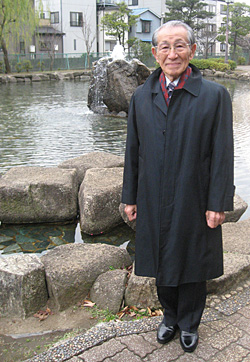
A Japanese Soldier Who Continued Fighting WWII 29 Years After the Japanese Surrendered, Because He Didn’t Know


Today I found out about a Japanese soldier who continued fighting World War II a full 29 years after the Japanese surrendered, because he didn’t know the war was over.

Hiroo Onoda is a Japanese citizen that originally worked at a Chinese trading company. When he was 20 years old, he was called to join the Japanese army. He promptly quit his job and headed off to training in Japan. At a certain point in his training, he was chosen to be trained at Nakano School as an Imperial Army Intelligence Officer. In this specialized military intelligence training, he was specifically taught methods of gathering intelligence and how to conduct guerrilla warfare. He was being groomed to go in behind enemy lines and be left with small pockets of soldiers to make life miserable for Japan’s enemies and gather intelligence in the process.

On December 26th, 1944, Onoda was sent to Lubang Island in the Philippines. His orders from his commanding officers, Major Yoshimi Taniguchi, were simple:

You are absolutely forbidden to die by your own hand. It may take three years, it may take five, but whatever happens, we’ll come back for you. Until then, so long as you have one soldier, you are to continue to lead him. You may have to live on coconuts. If that’s the case, live on coconuts! Under no circumstances are you [to] give up your life voluntarily.


Onoda then linked up with Japanese soldiers already on the island and shortly thereafter the island was overrun by enemy troops when other officers that were already on the island refused to help fulfill part of the orders that Onoda was given to destroy the harbor and airfield among other things. This in turn made it easier for the Allied forces to conquer the island, landing on February 28th, 1945. Shortly after the island was conquered the remaining Japanese soldiers split up into small groups of 3 or 4 and headed into the jungle.

Most of these small groups were quickly killed off. Onoda’s group though consisting of himself, Yuichi Akatsu, Siochi Shimada, and Kinshichi Kozuka, were not. They continued to use guerrilla warfare tactics to harry the enemy troops as best they could while strictly rationing supplies including food, ammo, etc. Supplementing their small rice rations with bananas, coconuts, and other food from the jungle as well as doing raids on local farms when they could manage it.

In October 1945, after another cell had killed a cow from a local farm for food, they came across a leaflet from the local islanders to them saying “The war ended August 15th. Come down from the mountains!” The few remaining cells discussed this leaflet extensively, but eventually decided that it was Allied propaganda trying to get them to give themselves up. They felt that there was no way that Japan could have lost so quickly since the time when they were deployed. Indeed, this would seem strange to anyone who had no knowledge of the atomic bombs dropped on Hiroshima and Nagasaki. Also, another one of the cells had been fired upon just a few days before; they felt that this wouldn’t have happened if the war was over.

Eventually, near the end of the same year local islanders, fed up with being shot at and raided, got a Boeing B-17 to drop leaflets all over the jungle. These leaflets had the order to surrender printed on them from General Yamashita. The few remaining cells once again scrutinized these leaflets to try to determine their authenticity. In the end, the wording on the leaflet pertaining to the method with which they would be sent back to Japan seemed fishy to them; largely because the wording made it seem as if Japan had lost, something they couldn’t fathom and which was a big problem in their willingness to accept the war had ended. If Japan had won, they would come and get them. Japan couldn’t lose, so the war must still be going. So they once again believed it was the Allies becoming more tired of their successful guerrilla tactics and trying to get them to surrender.

When this didn’t work, more leaflets were dropped with newspapers from Japan; photographs and letters from the soldiers families; delegates were sent from Japan and went through the jungle speaking over loudspeakers begging the soldiers to give themselves up. In every case the cells encountered, there was always something suspicious in their minds about the way it was done to cause them to believe it was an elaborate hoax by the Allied troops.

Years passed in the jungle with these four soldiers continuing to perform their sworn duty of harrying the enemy at every opportunity and gather intelligence as best they could. At a certain point, when most everybody they saw was dressed in civilian clothing, they began thinking that this too was a ruse from the Allied forces to lull the Japanese guerrilla soldiers into a false sense of confidence. They considered the fact that every time they fired on these “civilians” shortly thereafter search parties would arrive hunting them. Over time they had gradually let their solitude twist their minds into thinking everyone was an enemy, even their own fellow Japanese who would occasionally come and try to find them and get them to come home. These of course in their minds were Japanese prisoners forced to come lure them away from the safety of the jungle.

Eventually, after about 5 years in the jungle, Akatsu decided he would surrender, but didn’t tell the other three soldiers. So, in 1949 he slipped away from the others and after 6 months alone in the jungle was able to successfully surrender to what he thought were Allied troops. Because of this event, Onoda’s cell became even more cautious and went into deeper hiding and took fewer risks as they viewed Akatsu leaving as a security threat. “What if he was captured”, they thought.

About 5 years later, another of the small group, Shimada was killed in a skirmish on the beach at Gontin. Now there were only two, Onoda and Kozuka.

For about 17 more years the two lived in the jungle, gathering intelligence as best they could and attacking the “enemy troops” when they could risk it. They were still convinced that eventually Japan would dispatch more troops and they would then train these troops in guerrilla warfare and use the intelligence they had gathered to re-take the island. After all, their orders were to stay put and do as they had done until their commanding officer came and got them and their commanding officers had promised to do so no matter what.

Now in October 1972, after 27 years of hiding Kozuka was killed during a fight with a Filipino patrol. The Japanese had long thought he had already died, they didn’t think he could have survived so long in the jungle. But now when they had his body, they began thinking perhaps Onoda was also still alive, even though he had also long since been declared dead.

The Japanese then sent a search party to try to find Onoda in the jungle. Unfortunately, he was too good at hiding with 27 years of practice. They could not find him. Onoda continued his mission.

Finally in 1974 a college student, Nario Suzuki, decided to travel the world. Among his list of things to do on his journey was to find “Onoda, a panda, and the Abominable Snowman”. He traveled to the island and trekked through the jungle searching for signs of Onoda. Shockingly, where literally thousands of others through the last 29 years had failed, Suzuki succeeded. He found Onoda’s dwelling place and Onoda himself.

He then proceeded to try to convince Onoda to come home with him. Onoda refused. His commanding officers had said they would return for him no matter what. He would not surrender nor believe the war was over until they returned and ordered him to do so. At this point, he would not have been allowed to simply go home; he would be required to surrender and throw himself on the mercy of the enemy. Over the years he had been too successful at using the guerrilla tactics he had mastered. Killing 30 Filipinos and injuring over 100 others as well as destroying various crops and the like for almost 30 years.

Suzuki then traveled back to Japan with the news he’d found Onoda; Major Taniguchi, now retired and working at a book store, was then brought back to the island and to Onoda to tell him that Japan had lost the war and he was to give up his weapons and surrender to the Filipinos.

As you might expect, after living in the jungle doing what he thought was his duty helping Japan, now only turning out to be wasting 29 years of his life, and worse killing and injuring innocent civilians, this came as a crushing blow to Onoda.


We really lost the war! How could they have been so sloppy?

Suddenly everything went black. A storm raged inside me. I felt like a fool for having been so tense and cautious on the way here. Worse than that, what had I been doing for all these years?

Gradually the storm subsided, and for the first time I really understood: my thirty years as a guerrilla fighter for the Japanese army were abruptly finished. This was the end.

I pulled back the bolt on my rifle and unloaded the bullets. . . .

I eased off the pack that I always carried with me and laid the gun on top of it. Would I really have no more use for this rifle that I had polished and cared for like a baby all these years? Or Kozuka’s rifle, which I had hidden in a crevice in the rocks? Had the war really ended thirty years ago? If it had, what had Shimada and Kozuka died for? If what was happening was true, wouldn’t it have been better if I had died with them?

On March 10th, 1975 at the age of 52, Onoda in full uniform that was somehow still immaculately kept, marched out of the jungle and surrendered his samurai sword to the Philippine President Ferdinand Marcos. Marcos, very unpopularly in the Philippines, but immensely popular in Japan, pardoned Onoda for his crimes, given that Onoda had thought he was still at war the entire time.

Now in the end, we might look at Onoda as a fool and worse, a murder of innocent people. In the end, he was both of those things, there is no denying it. But at the same time, not everyone who lives by strict convictions and puts their all into achieving what they believe to be the right thing, ends up having what they strive towards turn out well or end up being a good thing. This is one of those cases where someone did something remarkable, showing extreme dedication to his country and his duty, as well as fortitude unmatched by many in history.

Had circumstances been different and the war really had waged on so long; soldiers and people from both sides of the fight would have respected him for his courage and dedication. In that respect he was more of a hero. However, the world wasn’t the way he thought and in the end, in retrospect, he was more a fool than anything else. But at the same time, we can’t ignore that this was a man who did something great with respect to doing something that few others could have done; had circumstances been as he thought, what he did was something to be admired. He faced (what he thought) was death around every corner and lived in an extreme situation for 30 years, fighting for his country. That should be respected. It’s a rare person who could do something like that and never quite or surrender; never take the easy way out as most of us do all the time when faced with adversity that is orders of magnitude less than what Onoda faced for almost 30 years in the jungle.


When Onoda returned to Japan, he was seen as a hero. He was also given his pay for the last 30 years. Life was much different in Japan now than he remembered, and not at all to his liking. Many of the traditional Japanese virtues he cherished such as patriotism were nearly non-existent in the culture; indeed in his view Japan now cow-towed to the rest of the world and had lost its pride and sense of itself. So he moved to Brazil and used his pay to buy himself a ranch there and eventually married.
Onoda released an autobiography: No Surrender, My Thirty-Year War in which he details his life as a guerrilla fighter.
After reading about a Japanese teenager who had murdered his own parents in 1980, Onoda became even more distressed at the state of his country and young people in Japan. He then returned to Japan in 1984, establishing a nature school for young people where he could teach them various survival techniques and teach them to be more independent and better Japanese citizens.
In May 1996, he returned to the Philippines to the island he had lived for 30 years donating $10,000 to local schools; as you might imagine, he is not too popular with the locals there, despite the donation.

Bonus Onoda Quotes:
Men should never give up. I never do. I would hate to lose.
Men should never compete with women. If they do, the guys will always lose. That is because women have a lot more endurance. My mother said that, and she was so right.
One must always be civic-minded. Every minute of every day, for 30 years, I served my country. I have never even wondered if that was good or bad for me as an individual.
Parents should raise more independent children. When I was living in Brazil in the 1980s, I read that a 19-year-old Japanese man killed his parents after failing the university entrance exam. I was stunned. Why had he killed his parents instead of moving out? I guess he didn’t have enough confidence. I thought this was a sign that Japanese were getting too weak. I decided to move back to Japan to establish a nature school to give children more power.
Parents should remember that they are supposed to die before their children. Nobody will help them later on, so the greatest gift parents can give their children is independence.
Never complain. When I did, my mother said that if I didn’t like my life, I could just give up and die. She reminded me that when I was inside her, I told her that I wanted to be born, so she delivered me, breastfed me and changed my diapers. She said that I had to be brave.

29 February 2012

2 dating websites sued for using dead soldier's photo in ads.

peter burks

A photo of Lt. Peter Burks that appears on his family's website, the Unsung Hero Fund, was misleadingly used on two dating websites without the family's permission, a lawsuit alleges. UNSUNGHEROFUND.COM


The picture of a handsome, uniformed soldier accompanying online ads that proclaim "Military Man Searching for Love" is an Army lieutenant who was killed in Iraq in 2007, according to a lawsuit filed by his parents Monday against two dating websites.

The parents of Army Lt. Peter Burks have sued PlentyofFish.com and True.com, alleging the companies used their son's photo in ads without their permission, benefitted financially and misled the public, The Associated Press reported.

Alan Burks, his father, told AP the ads "disgusted" him and that his son was engaged at the time of his death, so the idea that he was trying to meet women online as the ad portrays "couldn't be more wrong."

"I felt horrified, disgusted. It upset me," Alan Burks, who lives in Dallas, told The Associated Press on Monday.

Vancouver, British Columbia-based Plentyof Fish Media spokesman Paul Bloudoff said the company didn't advertise online in the U.S. in December. He said hundreds of thousands of third parties advertise via his company's site every month, and that it cannot control nor know about the content of those ads.

Even so, the ad has been blocked from the company's network, he said.

"We dealt with this matter a month ago," Bloudoff said in an email. "In our opinion, this case should not have been filed."

True.com President Ruben Buell said Monday that he hasn't seen the lawsuit but "will be researching this diligently." He said the Dallas-based company, whose official business name is True Beginnings LLC, buys ads that run on other dating websites but does not know what happened in this situation.

"I certainly feel for his family," Buell said Monday.

PlentyofFish Media did not say how long the ads - including one with Peter Burks' photo that said "Soldiers Want You!" - ran or how his photo was obtained, said Rogge Dunn, the attorney who filed the suit. In addition to emotional suffering, his parents have also suffered financial damages because, since his death, they have legal control over his image and never authorized any photos to be used to endorse these sites, Dunn said.

Alan Burks said he plans to donate any money awarded in the suit to military charities.

"For me, this is making sure that the honor and legacy of Peter is protected," he said. "But also it concerns me that they would use the likeness of a live soldier or someone else."

14 February 2012

Israel blames Iran after attacks on embassy staff


JERUSALEM (Reuters) - Israel accused arch-enemies Iran and its Lebanese ally Hezbollah of being behind twin bomb attacks that targeted Israeli embassy staff in India and Georgia on Monday, wounding four people.

Tehran denied involvement in the attacks, which amplified tensions between two countries already at loggerheads over Iran's nuclear program, and accused Israel of carrying out the attacks itself. Hezbollah made no comment.

In the Indian capital New Delhi, a bomb wrecked a car taking an Israeli embassy official to pick up her children from school, police said. The woman needed surgery to remove shrapnel but her life was not in danger.

Her driver and two passers-by suffered lesser injuries.

Israeli officials said an attempt to bomb an embassy car in the Georgian capital Tbilisi failed, and the device was defused.

Israel had put its foreign missions on high alert ahead of the fourth anniversary this past Sunday of the assassination in Syria of the military mastermind of Hezbollah, Imad Moughniyeh - an attack widely assumed to be the work of Israeli agents.

Israel is believed to be locked in a wider covert war with Iran, whose nuclear program has been beset by apparent sabotage, including the unclaimed killings of several Iranian nuclear scientists, most recently in January.

Prime Minister Benjamin Netanyahu blamed both Iran and Hezbollah, accusing them of responsibility for a string of recent attempted attacks on Israeli interests in countries as far apart as Thailand and Azerbaijan.

"Iran and its proxy Hezbollah are behind each of these attacks," said Netanyahu, who dismisses Iran denials that it is trying to develop a nuclear weapon. "We will continue to take strong and systematic, yet patient, action against the international terrorism that originates in Iran."

Iranian Foreign Ministry spokesman Ramin Mehmanparast rejected Netanyahu's accusation, saying it was Israel that had carried out the attacks as part of its psychological warfare against Iran.

"It seems that these suspicious incidents are designed by the Zionist regime and carried out with the aim of harming Iran's reputation," the official news agency IRNA quoted Mehmanparast as saying.

Israeli officials have long made veiled threats to retaliate against Lebanon for any Hezbollah attackon their interests abroad, arguing that as the Islamist group sits in government in Beirut, its actions reflect national policy.

White House spokesman Jay Carney told reporters in Washington that the United States had no information yet on who was responsible, adding: "These incidents underscore our ongoing concerns of the targeting of Israeli interests overseas."

MOTORCYCLE ATTACK

The New Delhi blast took place some 500 meters (yards) from the official residence of Indian Prime Minister Manmohan Singh.

B.K. Gupta, the New Delhi police commissioner, said a witness had seen a motorcyclist stick a device to the back of the car, which had diplomatic registration plates.

"The eyewitness ... says it (was) some kind of magnetic device. As soon as the motorcycle moved away a good distance from the car, the car blew up and it caught fire," said Gupta.

The Iranian scientist killed in Tehran last month died in a similar such attack by a motorcyclist who attached a device to his car. No one has claimed responsibility for that, although Iran was quick to accuse agents of Israel and its U.S. ally.

Israel named the injured woman as Talya Yehoshua Koren, who worked at the embassy and was married to the defense attache.

"She was able to drag herself from the car and is now at the American hospital, where two Israeli doctors are treating her," an Israeli Defense Ministry spokesman said.

Thailand said last month its police had arrested a Lebanese man linked to Hezbollah, and that he later led them to a warehouse stocked with bomb-making materials. Also last month, authorities in Azerbaijan arrested two people suspected of plotting to attack Israel's ambassador and a local rabbi.

In a speech on January 24, Israel's military chief of staff, Lieutenant-General Benny Gantz, accused Hezbollah of trying to carry out proxy attacks while avoiding direct confrontation.

"During this period of time, when our enemies in the north avoid carrying out attacks, fearing a harsh response, we are witnesses to the ongoing attempts by Hezbollah and other hostile entities to execute vicious terror attacks at locations far away from the state of Israel," Gantz said.

"I suggest that no one test our resolve."

Israel and Hezbollah fought an inconclusive and costly war across the Lebanese border in 2006.

source: REUTERS

13 February 2012

So How Long Before Openly Gay Troops Can Serve?


In the wake of the Senate’s vote to end “Don’t Ask, Don’t Tell” on Saturday — and President Obama’s plan to sign the bill into law Wednesday morning — just how long is it going to be before gay men and women can serve openly? Some Pentagon officials have suggested it could be a lengthy process, perhaps more than a year, while a new report from an independent think tank says it can — and should — be done in a matter of weeks.

Marine Col. Dave Lapan, a Pentagon spokesman, said Monday that the Defense Department will “move out carefully, deliberately and purposefully” to implement the new policy, which suggests speed is not of the essence. But at the same time, ending the ban should not be “overly burdensome,” White House press secretary Robert Gibbs emphasized. The Pentagon’s formal 87-page implementation blueprint says that “leaders must be given clear, equitable, and enforceable standards of conduct and the tools required to enforce standards and maintain good order and discipline in a sexual orientation-neutral way.”

But in a soon-to-be published study, the Palm Center of the University of California at Santa Barbara says Pentagon talk of the need for a year before gays can serve openly “is not based on a reasonable assessment of what it takes to educate the troops.” Air Force veteran Aaron Freed says “the Pentagon can quickly train all personnel regardless of status or location” — including in war zones — and that “training is not prerequisite to a policy going into force.” Implementing “Don’t Ask, Don’t Tell” required less than two months in 1993, he notes.

But that’s not likely to be the prevailing view. Some inside the Pentagon take pride in how the military has handled repeal so far, and don’t want to do anything to jeopardize its implementation. Bottom line: the policy won’t change until Pentagon leaders can assert the action won’t harm U.S. military readiness, and they maintain they don’t know how long that will take. There’s talk of up to 18 months for the Army and Marines, less for the Air Force and Navy. But such a lengthy time frame is not likely to win approval from Defense Secretary Robert Gates and Adm. Mike Mullen, chairman of the Joint Chiefs, who championed repeal.

But it will take months. The services have to draft training and communications plans to educate the force, rig personnel policies to accommodate the change, and figure out how benefits will be adjusted. Once they have everything in line, the Pentagon will declare it is ready to allow gays to serve — and then there will be a final 60-day period before they do.

Counseling will be a key element of dealing with conflict under the new rules. Maintaining good order and discipline will trump personal feelings, as it always has. Gay couples will be treated for the most part as unmarried heterosexuals, suggesting they won’t be eligible for most military benefits. A sailor upset with a gay roommate is likely to be able to move to new quarters. Chaplains — many of whom view homosexuality as a sin — will not be muzzled.

Army leaders told their troops the change simply represented another order to carry out. “We will implement this change in the same disciplined manner that has characterized the Army’s service for the past 235 years,” they said in a weekend message. Gen. Norton Schwartz, the Air Force chief of staff, told his people that “the standards of conduct we expect of all Airmen will not change. Moreover, we will continue to treat each other, as members of the Air Force family, with dignity and respect.”

Despite the controversy surrounding the issue, the basic approach seems to be — hold on to your hat — common sense. Harassment of gays won’t be tolerated. There will be no public displays of affection — but PDA has always been banned. Separate barracks and bathrooms? Didn’t we vainly try “separate but equal” during our struggle to integrate American public schools? Many military personnel, speaking privately, have been preparing for this change to come for years. They don’t see it as a big deal, and many wonder what all the fuss is about.

08 February 2012

SU-30 Redefines the Laws of Gravity.


Watch This Video of SU-30..fantastic! manuver. U-30 pilot demos some amazing skills.

05 February 2012

U.S. brigadier general dies in Afghanistan


(CNN) -- U.S. Brig. Gen. Terence Hildner died in Kabul of apparent natural causes, officials said, making him one of the highest ranking officers to die in Afghanistan.
He was 49.

Hildner, who was commander of the 13th Expeditionary Sustainment Command, Fort Hood, Texas, was in Afghanistan to support the NATO training mission.

"The unfortunate and untimely death of Brigadier General Hildner was a shock to our unit and Families," Col. Knowles Atchison, 13th ESC rear commander, said in a statement posted on the Foot Hood website. "Both forward deployed elements and we at home station are deeply saddened by this loss. We will all pull together through this difficult period and care for one another."

The circumstances surrounding his death are under investigation, the statement said.

Hildner graduated from the University of Notre Dame in 1984 and attended the U.S. Army Command and General Staff College in 1997. A Connecticut native, he listed his home in Fairfax, Virginia.

In 2003, Hildner assumed command of the 13th Corps Support Command's Special Troops Battalion at Fort Hood. That battalion conducted two operational deployments during his years in command -- the first in support of Operation Iraqi Freedom, the second in the wake of Hurricane Katrina.

Previously, Hildner served in Iraq during Operation Desert Storm and participated in the last U.S. patrol along the East-West German border before its reunification.

source: CNN NEWS

20 January 2012

Carbon 15 Pistol – Bushmaster


The Carbon 15 pistol is a firearm similar in design to an ArmaLite AR-15 or the Colt M4 Carbine. The main differences between the Carbon 15 “pistol” and actual M4 is the absence of the shoulder stock and the fully automatic option. You don’t really want or need full auto though, because the Carbon 15 is not designed for suppressive fire, likewise, the red dot sight fitted on the accessory rail optimizes this weapon for close quarter personal defense-ideal for confined spaces. 

We got the chance to let off some rounds with one of these bad boys not too long ago, and let me tell you, fire literally shreds it way out of the barrel. The accuracy was limited to short ranges, but the proprietary carbon 15 construction material makes it so light, coupled with the red dot sight, that one can hit successive targets accurately with little trouble.

Carbon 15 Pistol

Manufacturer: Bushmaster

Small Diameter Bomb – GBU-39


The GBU-39 Small Diameter Bomb – the future of ultra-surgical air strikes.

Since the days of the first Gulf War, when it became clear to the world that precision air strikes would be the “go to” option for the opening rounds of nearly any theater scale military operations, the technology of precision guided munitions has increased rapidly. We have witnessed bombs being guided into their targets by lasers, GPS, and even a human watching through a camera on the nose of the weapon. Once the concept of precision guidance was no longer a novelty, the virtuous auspices of limiting collateral damage and economic efficiency have led military planners and weapons designers to push the envelope of precision weapon technology even further.

During the Desert Storm era, the smallest precision bombs available packed 500 lb high-explosive warheads, and the 500 pounder was typically used on only the smallest of targets. They certainly were precise enough on surgical targeting, but the massive explosion and pressure wave still causes widespread devastation to buildings and well, people, that are in the vicinity of the blast. Now I’m not saying that it’s ever goign to be possible to truly eliminate collateral damage, but I believe technology has reached a stopping point concerning precision-guided air-launched munitions. It’s not as if limiting collateral damage is such a bad thing after all; so I guess we can go ahead and bestow the honorable hallmark characteristic of the next wave of precision munitions: Efficiency…because accuracy is a given.
Fresh on the block is the new GBU-39 Small Diameter Bomb. The GBU-39 is the first 250 lb class precision guided munition, and is not only intended to allow the pilot to strike more targets per sortie, but also to -you guessed it- limit collateral damage. A full rack of GBU-39s, 4 bombs total, can easily take the place of one 2000 lb GBU 109 “bunker buster” guided bomb on typical strike platforms such as the F-15C or F-22 Raptor aircraft. While the 2000 lb GBU-109 penetrator definitely retains its place as a select weapon of choice for large and hardended targets, the GBU-39 SDB surpasses the GBU-109 in many different realms of performance. For starters, the GBU-39 also has significant stand-off capabilities. With it’s guidance wings, the bomb can coast into targets from far greater ranges than the GBU-109, from more than 40 nautical miles out. Likewise, the design of the warhead also allows the Small Diameter Bomb to achieve the same penetration capabilities of it’s much larger 2000 lb counterpart. All in all, the SMB GBU-39 allows for a great amount of flexibility for whomever is designing strike missions for an urban environment.


US Army Burns off Final Chem Weapons in Utah


STOCKTON, Utah -- The U.S. Army has destroyed about 90 percent of its aging chemical weapons after it wraps up work this week in Utah, where it has kept its largest stockpile - a witches' brew of toxins, blister and blood agents that accumulated through the Cold War.


The Army's Deseret Chemical Depot in Utah's west desert burned its last hard weapons in a 1,500-degree furnace on Wednesday - projectiles that contained mustard agent, which can produce painful skin blisters. The last tray of 23 projectiles came out of a furnace at 2:11 p.m. after baking for two hours, a process that rendered the mustard agent harmless.


The depot - which at its peak held some 13,600 tons of chemical agents, making it the world's largest - expects to complete the job by the weekend when it incinerates bulk supplies of Lewisite, a powerful skin, eye and lung irritant.

source: Military.com

17 January 2012

Why Iranian student had radioactive metal in his bag


Ears prick up around the world at any news involving radioactivity and Iran. The most recent story broke on Friday, when Russia's customs service announced that it had stopped an Iranian man bound for the Iranian capital, Tehran, with 18 pieces of radioactive metal packed in steel pencil cases in his luggage. The material had triggered radiation detectors at Moscow's Sheremetyevo airport.

What was the radioactive material in the man's luggage and what is it normally used for?
It was sodium-22, an isotope used to make internal organs and tumours show up in medical PET scanners, and also to determine the thickness of metals and calibrate radiation measurements.

Was it part of a plot to make a bomb?
Unlikely. Mark Hibbs, a non-proliferation expert with the Carnegie Endowment for International Peace, a think tank based in California, says he discussed the incident on Saturday with "extremely senior" security staff at the White House. "The talks convinced me the sodium had no weapons use whatsoever", he says. "If it had been for weapons, we wouldn't have found out about it."

The material would be little use for a dirty bomb aimed at scattering radioactive contamination, as its emissions die fairly quickly, with a half-life of 2.6 years.

But is Iran trying to make a bomb all the same?
The Iranian government denies it – but it probably could it if wanted to. Both inreports last month and in unpublished assessments, the International Atomic Energy Agency (IAEA) says Iran has the know-how and enough fuel-grade uranium to make four nuclear bombs, if it enriches the uranium further. It has already enriched 80 kilograms of it to one step short of weapons grade.

Why would Iran need sodium-22, then?
Probably for medical use. The Tehran Research Reactor, where Iran makes its own medical isotopes, is out of fuel, and although Iran says it will soon make its own, "the production line isn't working yet", says David Albright of the Institute for Science and International Security, a think tank in Washington DC that watches Iran.

Why was the man taking it out of Russia in his luggage?
"Iran is a magnet for isotopes dealers, and Russia is a major supplier," says Hibbs.

Sodium-22 can be imported into Iran legally because of its medical uses, he says. The man might simply have been dodging the costly export permit.

The incident happened a month ago, and the Iranian, a dental student, was released after what the Iranian ambassador to Moscow called "a misunderstanding" – although apparently without his radioactive stuff.

How did it get through?
The real question raised by the incident is how much radioactive material like this breezes unimpeded through airports less vigilant, or well-equipped, than Moscow's. There's enough of it about: in September the IAEA reported 172 incidents of radioactive material going astray just in the past year, including 46 attempts to steal, smuggle or sell it, and 10 where it wasn't recovered.

Sixteen incidents involved the plutonium or highly enriched uranium that can be used to make bombs. Last year in Washington DC governments agreed to take better care of their stocks – but the agreement lacked teeth.

How was it detected?
Moscow would have spotted the sodium-22, which emits gamma rays, with a detector similar to a Geiger counter, says Hibbs. These were installed in several Russian airports by a US-Russian programme in the 1990s to lock down nuclear material after the fall of the Soviet Union. But they aren't routine everywhere, says Jason Woods of Washington University in St Louis, Missouri, because "if you stopped everything with gamma rays, you'd hold up a lot of shipments".

For example, US airports scanned flights from Japan after the Fukushima nuclear accident this year and found gamma rays coming from cargo onflights to Chicago and Dallas. The source turned out to be ordinary medical equipment.

Moreover, "there are big holes in export controls worldwide", says Hibbs, especially outside the Nuclear Suppliers Group of 46 mostly rich countries.

What is being done to stop other forms of radioactive material being smuggled?
The IAEA is developing better handheld detectors to spot different kinds of radiation. Neutron detectors, meanwhile, can spot plutonium without being distracted by legitimate gamma emitters. The US wants to install them at land transport hubs, seaports and airports worldwide.

The problem, says Woods, is that current detectors use helium-3. "It's shy a neutron, so it's hungry for them and good at picking them up," he says. But US production of helium-3 is 8000 litres per year, and the detector programme needs 60,000. Last year Russia stopped exporting it.

Moreover, says Woods, helium-3 is irreplaceable for work in ultra-low-temperature physics and medical uses such as lung imaging. "It should be kept for that," he says, and told the US Congress so earlier this year. Congress agreed: the detector programme is on hold while equipment manufacturers develop alternatives based on boron-10.

15 January 2012

2 Navy Pilots Among Dead in Murder, Suicide


Two Navy pilots and the sister of one of them were among four people killed in an apparent New Years Day murder-suicide on the wealthy island of Coronado off the coast of San Diego, officials say.

The two F/A-18 pilots were in training at the U.S. Marine Corps Air Station Miramar, the base said. The San Diego County Medical Examiner's Office initially posted on its website that the pilots were both 25-year-old males and that a third male among the dead was a 31-year-old resident of nearby Chula Vista.


The county office later took the information off the website, according to the Reuters news service.

Sheriff’s deputies found the bodies shortly after 2 a.m. Sunday when responding to a call about shots being fired at the residence.

Though officials have yet to identify all the dead, the Navy confirmed for The Associated Press that David Reis, 25, of Marine Corps Air Station Miramar, and his sister Karen Reis, 24,were among the four.Their father, Tom Reis of Bakersfield, told AP that he didn’t know who else was living in the condo of the wealthy seaside community where his son was staying.

"He just had his first F/A-18 flight," Tom Reis said. "Oh man, he loved it."

David Reis held a mechanical engineering degree from the University of New Mexico. Karen Reis graduated from the University of California, San Diego in 2009 and stayed in the area, coaching volleyball and working at a grocery store.


"It's still a shocker," said Rebecca Bailey, 26, who played college volleyball with Karen Reis and later coached with her at a high school and club program. Karen Reis graduated from the University of California, San Diego in 2009 and stayed in the area, coaching volleyball and working at a grocery store.

"This kind of thing doesn't happen to people like her and David. Their family is the family everybody wants to be a part of. They're just so loving, and there's so much love in their family."

"She has a really great spirit and knows how to make things fun," Bailey said.

The remaining victims were another 25-year-old Navy man and a 31-year-old man from Chula Vista, authorities said. Their names were not immediately released.

Officials found a dead man in the doorway to the three-story condo and the bodies of two men and a woman inside in different parts of the structure.

It was not immediately clear how the four people died. However, authorities previously said they did not believe there were any outstanding suspects.

Messages left Monday with Navy Region Southwest and the San Diego County sheriff's homicide detail were not immediately returned.

Neighbor Don Hubbard said he was awakened by the shots that he thought were fired by New Year's revelers. He went back to sleep, but two hours later got a phone call and heard SWAT teams swarming the area.

Hubbard, a retired Navy commander, said he saw the body of one man in the condo doorway and recognized him as his neighbor - a Navy pilot receiving training at Miramar.

"I knew these guys were pilots because I was one and we'd talk about airplanes," Hubbard said. "Even now, you say, how could this have happened? What the hell is going on here?"

The condo is located a few blocks from the famed Hotel del Coronado and a block from the main street lined with boutiques and restaurants.

Coronado is home to Naval Air Station North Island and is a haven for Navy retirees. Homicides are extremely rare in Coronado - just one was recorded in 2010.

Source: Military.Com

Sponsor Links

THE SECRET TECHNIQUES TAUGHT TO THE WORLDS ELITE FIGHTING FORCES?
one step away from learning the most devastating declassified fighting material
USE BY ELITE MILITARY UNITS
www.fightingmanuals.com

KARATE TEACHING MARTIAL ARTS?
Makes Teaching Martial Arts Easy With 100+ Drills and Exercises!
www.karateteaching.com

THE PRECISION SHOOTING PROGRAM?
Clear and Easy to Understand?
IT IS SO SIMPLE!
www.precisionshootingprogram.com/